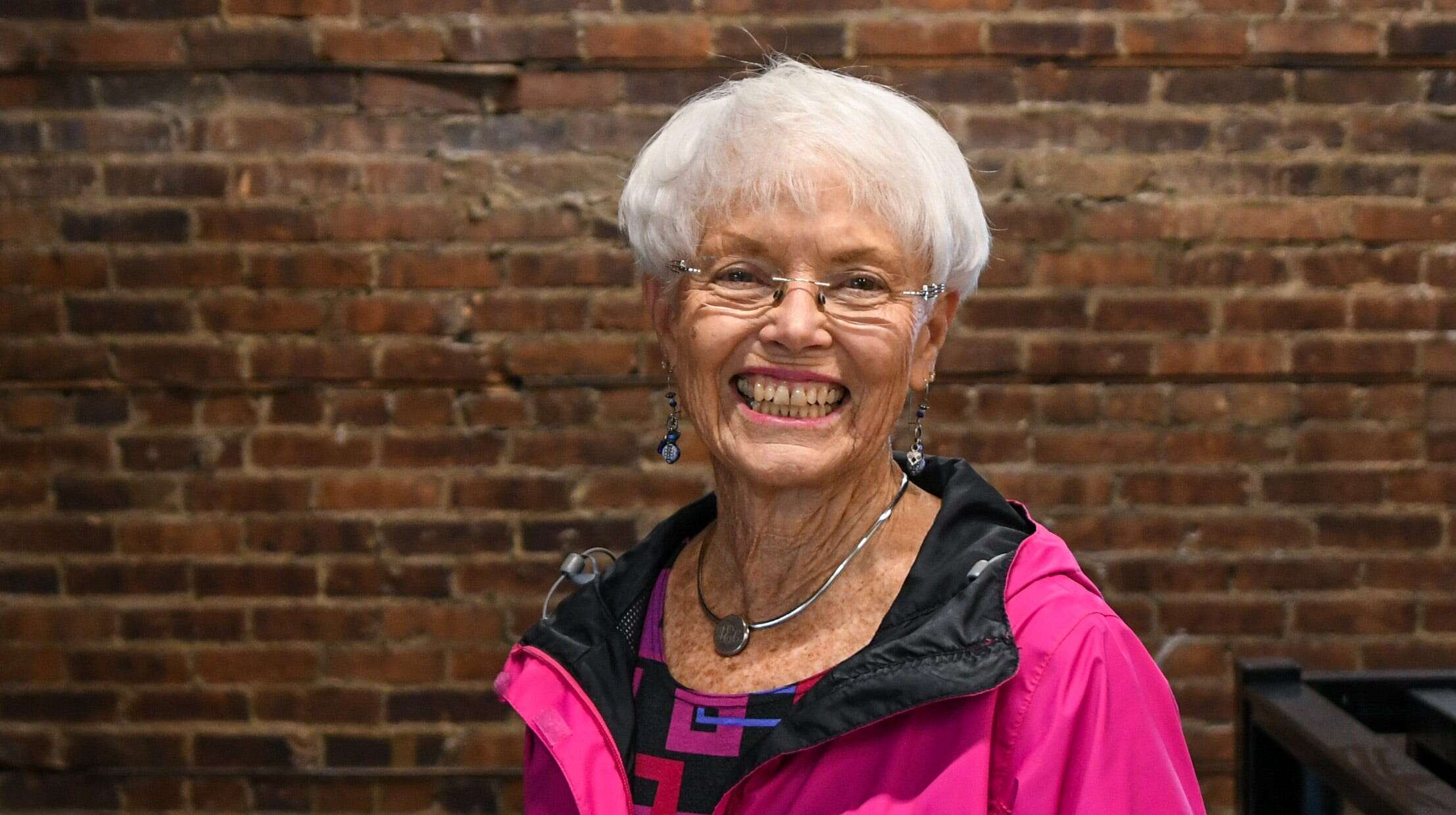
State Senator Adelaide (Addie) Eckard represents the 37th Legislative District, which includes the Counties of Dorchester, Caroline, Wicomico, and Talbot. She was elected to the Maryland Senate in 2014.
EEDC: What are some areas that have your attention as we begin the New Year?
Sen Addie Eckhardt (AE): I’ve been concerned about small businesses. We’ve seen some companies thrive while other companies didn’t do well. So my concern is how we revitalize and restore our businesses.
I’m extremely worried about our health care industry because our workforce is just exhausted. Anytime something persists, it becomes more chronic than acute, and it takes a toll on everybody. The pandemic was something nobody could have anticipated, though the response to that has not been as short-term as everybody would have liked.
Another concern is the workforce. And that’s across the board–everything from the healthcare industry, to the childcare industry, from retail to restaurants, and the entertainment field. Of course, there is worry about how we maintain all of the infrastructure issues that make businesses work, whether it’s water, sewer, broadband, or transportation.
EEDC: So what’s being done to help?
AE: I’m on the Budget Tax Committee, and our job is to make sure that the dollars that the state receives, either from income tax, personal property tax, general property tax, or other fees and in addition to that the funds that we get from the federal level are spent wisely on our state agencies and infrastructure. I also sit on the Audit Committee, and there is a regular and ongoing audit of the various departments. We look to make sure that all the procurement practices utilized through the pandemic are matched up. We want to know the procedures and policies in place align, and if not, why not? What was the return on our investment? We have lengthy conversations about that because it is the legislature’s role to be the checks and balances with the executive branch of government.
EEDC: You’re on an impressive number of committees and sub-committees, so your finger is really on the pulse of what is going on in Maryland, and speaking of pulse, you’re a former nurse?
AE: I am a nurse; I maintain all of my credentials and do some side work, as well.
EEDC: I guess this fits nicely into some of the legislative work you’re involved with?
AE: Yes, such as some Senate-generated assignments like the Behavioral Health Advisory Committees, the Suicide Commission, the Maryland Environmental Trust, Also, adult-use cannabis, sports betting, etc.
So yes, it fits in with my nursing practice exceptionally well because I am an advanced practice nurse, also known as a clinical nurse specialist. That means I have my master’s degree and additional certification that I maintain regularly. I apply a lot of what I’ve learned about dealing with families to organizations. I’m always looking for possibilities within the community and know enough about what people are thinking about or may want. Then when I see resources within that structure, I can put people into the right place, make the proper introductions, and try to make something happen.
EEDC: And that’s part of the local government work you’re involved with, right?
AE: Correct. My job is about identifying problems in the system and then putting pressure in the right place to get it straightened out. Working with local governments and supporting local interests is part of my Senate work. It could be something such as the Frederick Douglass mural, the park development Easton Point/Port Street project for Easton, getting the waterfront done in Cambridge, or making sure we all have affordable health services.
EEDC: What else is on your radar for Easton?
AE: Well, we’ve got a number of things that are unfinished, like a hospital, right? I mean, that’s a biggie. With so much going on in downtown Easton, it may not be as apparent here as it is to many people in Cambridge that you can’t take people to Dorchester General anymore because if it’s something major, the ambulances will go either to Easton or Salisbury. So we need to make sure we have those facilities available.
I think, particularly for Easton, workforce housing and community development are significant. We have noticed demographic changes in our community. When we look at our school system, we have quite a variety of cultures and changing income levels. We need to make sure that there are ample resources for all of our citizens. Programs such as BAAM help make sure that communities of color have access to resources to support younger families. They also build strength and continuity in families so that children are ready to come to school to learn.
And then, we also need adequate resources for the population with special needs or unique abilities. Services such as The Arc Chesapeake Region or the Benedictine School help folks maintain their independence to the best of their ability in the community, which allows them to be able to be engaged to their fullest extent.
EEDC: Identifying these critical issues is the first part; what’s the next step, how can we make sure it happens?
AE: We want to make sure that organizations are grounded in public/private partnerships and that they’re getting community engagement to leverage the additional state funds that might be needed to push it to the finish line. That’s what happened with The Arc, and it also happened with BAAM making a lot of initial investment in their project. The Maritime Museum always makes a significant investment from the community and around the state on projects because they are seen more as a statewide resource. Then we have projects such as the trail and the Port Street Redevelopment Project, the Historical Society, and the Art Academy Museum. We’d love to see if funding is needed and then look in the budget to see what’s available.
EEDC: What programs or initiatives are you excited about this year?
AE: The development of the Hill is an important one. We have the corridor that goes down to Port St. and Easton Village. Then on the other side of the bypass, where that trail connects, you could bike all the way to Tilghman’s from there. This development is already an asset, but it’s going to even be more valuable the further it gets fleshed out with making sure there’s a lot of green space and a certain amount of development there. Many people in Talbot County are willing to step in and step up, and that is significant.
One of the other things that I’m mainly focused on it’s making sure there’s diversity in community resources, making sure you have enough for all ages that you want to attract. I mean. For instance, we’ve attracted a whole new young population of folks in Cambridge. The waterfront is a big project for me down there. Then we’re building a real multicultural business climate for folks who want to dream and grow and have new ideas because once you get that creative combination of people together, that’s contagious. And that builds the community. Putting those elements in place and keeping people focused on those kinds of initiatives channels the energy in a very good way.
EEDC: So, what advice do you have for the community leaders at this time?
AE: Be careful of distractions. We’ve got some things in play right now in Dorchester County that have been on people’s minds and dreams for 25 years. It’s too easy to give up, so don’t. Stay the course but be careful of tripping over little things that are a distraction. Stay focused, and keep perspective on the end goal. Try to build collaboration along the way, bring people with you, keep talking about things, keep brainstorming about things. I found that sometimes you can accomplish much more if you have to wade through dissonance and maintain and build relationships with various people. You might not agree or see eye to eye, but don’t stop the conversation. Especially now more than ever with everyone having an opinion.
So I say to community leaders: stay engaged with the political process and what’s going on in Annapolis. There are a lot of bills, both good and bad. We need folks to be engaged in that with us. I’m going to be pushing some bills this year that will take a heavy lift because some things have to get untangled before they get better. Expect me to take a stab at a couple of those and try to bring everybody together. And if we don’t succeed this year, we’ll try it again next year.
EEDC: Is politics something that was in your blood?
AE: Oh, no, I’m a nerd. Just give me a job to do, and let me go and do it. Give me a puzzle, and let me figure it out. I was not very political. I was President of Maryland’s Nurses Association, which got me into the hospital board, which got me into health care reform. Then a family member of one of my patients said I needed to try politics. I told her she was crazy. And she said, just put your name on the ballot, I’ll help you, and I did.
We created the Chesapeake Health Planning System out of nothing by writing legislation. That’s how I cut my teeth. That became the foundation for a lot of what I’ve done through the years in mental, behavioral, and general health. I’ve been very blessed to have a whole lot of wonderful opportunities. I spent five terms in the House of Delegates, and when the time was right, I decided it was now or never and ran for the Senate. And that’s been just an incredible journey that has opened all kinds of doors because I’m used to working with folks who may not want to go in the same direction, who cannot see the forest for the trees. So things happen by coming alongside and supporting, coaching, and cueing.
EEDC: Any final words?
AE: We need to keep the focus on making sure people have access to resources. Basic ones, such as childcare, education, safety, health, housing, jobs, and workforce development. We need to build communities where folks work together on various initiatives, where a variety of people can get engaged, and that helps everybody. Let’s keep the focus on what we can achieve together.
Know anyone new to Easton? We’d love to hear their story! Email