Chesapeake Neighbors, a subsidiary of The Arc Central Chesapeake Region (The Arc), announces its strategic partnerships with Rivers & Roads and IKIGAI Coaching and Consulting. These partners will create solutions to address the need for affordable housing within the Town of Easton, MD, and the Mid-Shore region. “Rivers & Roads is extremely excited to help Chesapeake Neighbors work toward shrinking Easton’s affordable housing gap,” said Ross Benincasa, cofounder, Rivers & Roads. “As the average price of a new home climbs to nearly $700,000 in Talbot County, there has never been a more consequential time for an affordable housing provider to break ground.” Rivers & Roads, along with Michael White of IKIGAI, will support Chesapeake Neighbors’ goal of doubling the number of accessible and inclusive units across the region to 120 by 2025. Goals of the partnership include facilitating the acquisition and construction of new affordable housing options in underserved counties on Maryland’s Eastern Shore. In addition, Chesapeake Neighbors is partnering with Chesapeake Community Development, a community focused organization of The Arc, to develop Port Street Commons, a mixed used 20,000+ square foot building on historic Port Street in Easton, MD. For the Port Street Project, Chesapeake Neighbors will focus on the development of eight housing units that includes 2- and 3-bedroom residences to include zero barrier apartments. According to the Pew Research Center, “About half of Americans, roughly 49 percent, say a lack of affordable housing in their local communities is a major issue.” According to The Talbot County Department of Planning and Zoning website, while they are accepting applications for public housing, the wait may be as long as 2-3 years with approximately 150 people on the waitlist. Gwen Eskridge, President of the Mid-Shore Board of REALTORS, commented, “Everyone knows the Eastern Shore is an amazing place to live, but affordable housing continues to be a challenge. The REALTORS are excited to see The Arc’s subsidiary, Chesapeake Neighbors, building eight affordable housing units. This will benefit our entire community.” About Chesapeake Neighbors Chesapeake Neighbors was founded in 2007 by The Arc Central Chesapeake Region to provide, promote and support safe, affordable, and accessible housing for people and families in need. From one house in Anne Arundel County, the organization has grown to represent over 50 owned and managed, affordable, accessible single and multifamily units across Anne Arundel County and the Eastern Shore of Maryland. Learn more: www.chesapeakeneighbors.org About Rivers & Roads Rivers & Roads is a regional consulting agency focused on projects that revitalize communities. We love working with engaging Main Street communities, upstart entrepreneurs, sustainable workforce housing, and mission-first nonprofits. To contact, please visit: www.riversandroads.com About IKIGAI Coaching and Consulting Michael White, founder & principal, represents clients on state and local governments relations matters across Maryland. These clients are mission-driven organizations working to increase impact by leveraging state programs and resources. They receive support on issues related to housing/affordable housing, IT, real estate, adaptive reuse/development, procurement, and in identifying and determining eligibility for state funding programs. To learn how Michael White can help your organization thrive: .
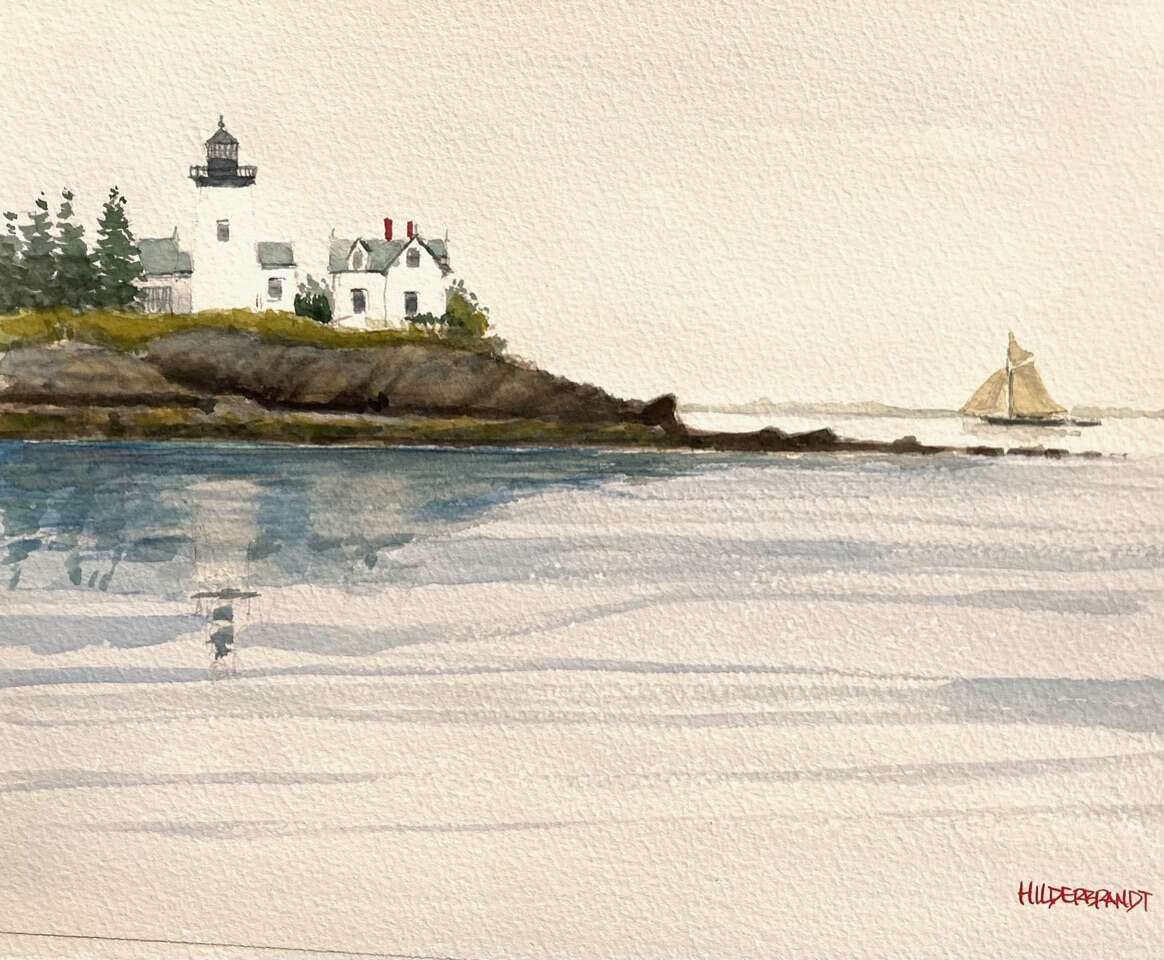
Hilderbrandt Watercolors Back at The Trippe Gallery
The Trippe Gallery is pleased to open a show this weekend featuring the watercolors of Don Hilderbrandt. Trippe and Hilderbrandt co-owned the gallery pre-cursor-Trippe-Hilderbrandt Studios on Harrison St. until 2013 when Hilderbrandt retired from exhibition painting and moved to Colorado. We are happy to report his return to Maryland and, better yet, a return of his watercolor paintings to the gallery! Titled “Coast to Coast” the exhibition showcases numerous watercolors depicting landscape scenes from Tilghman to Maine to the west coast of Washington State. Don Hilderbrandt’s artistic focus is grounded in landscape architecture degrees from Penn State and Michigan. As co-founder of LDR International, an urban design/land planning firm, Don interrupted a successful part-time watercolor practice in 1979 to devote full time to an international planning and design business. Don is resurrecting an artist’s career that started in 1967. He received seven awards from the Baltimore Watercolor Society’s annual exhibition, including three First Awards. He also was invited to exhibit at the Baltimore Museum of Art, numerous colleges, the Center Club in Baltimore and was represented by the William Riis Galleries in Camp Hill, PA, Hershey, PA and Stone Harbor, NJ. Much of his appreciation of the rural landscape was fostered while growing up in the hills of Pennsylvania. Don’s training as a landscape architect enhanced his technical ability to interpret and present various images of landscapes and waterfronts of the Eastern Shore of the Chesapeake Bay and coastal Maine. We are so pleased to welcome him back and be able to exhibit his iconic watercolors. There will be an opening reception with Don on Saturday March 5 from 4-6pm at the gallery, 23 N Harrison St. For more information please call the gallery at 410-310-8727.
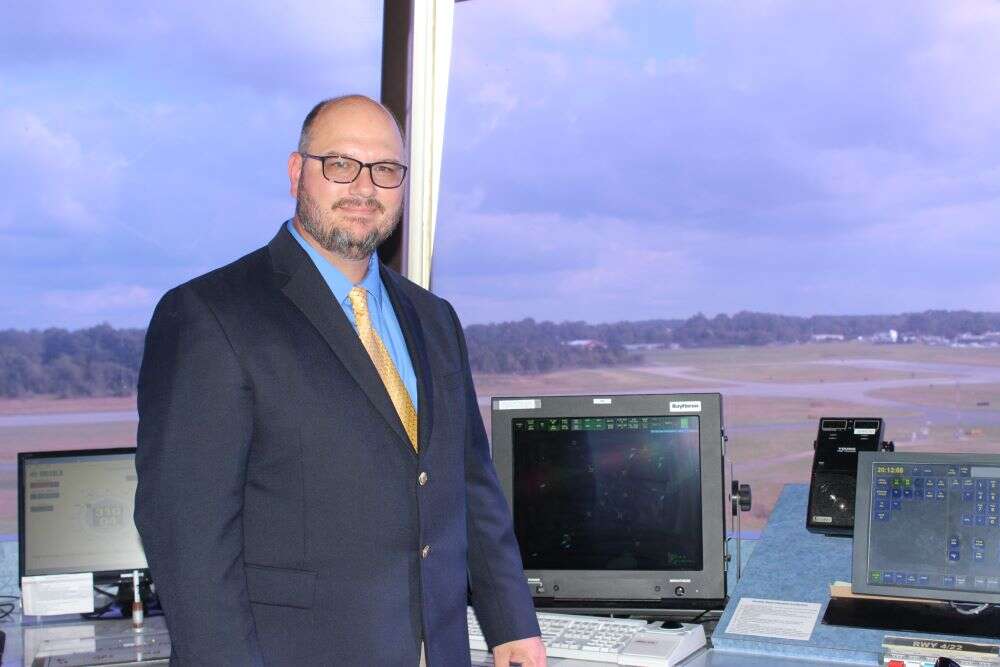
Micah Risher Elected President of the Maryland Airport Managers Association
Easton Airport Manager Micah Risher has been elected President of the Maryland Airport Managers Association (MAMA). The association was established in 1996 to provide a medium for the exchange of ideas related to airport management. Members encourage legislation advantageous to airports and work closely with the Maryland Aviation Administration (MAA), and other aviation organizations, to address and resolve airport issues. We met with Mr. Risher in his Easton Airport office, a space filled with aerial maps and ongoing projects. His dry erase board is filled with action items, deadlines, and goals for 2022. We asked him about MAMA, what he hopes to achieve during his term as President, and why he would add this as another item on his wall of to-do’s. What is the Maryland Airport Managers Association’s (MAMA) mission? MAMA’s mission is to provide a unifying voice on aviation matters in the state of Maryland. We work together to educate the community at-large and our policymakers about the benefits aviation has on all segments of commerce and economic prosperity. Those benefits are felt inside and outside the gates of each Maryland airport. Just the other day I was reading a report that said for every one job directly related to an aviation enterprise, three more jobs exist to support it. That is a huge return on investment. That is the type of information we need to share because airports offer our communities these unique benefits and opportunities. What roll did you have in MAMA before being elected President? I served as the Vice President of MAMA for two years. On top of that, I have worked in a variety of aviation rolls over my career that now spans three decades. That experience helped me connect with the airport managers immediately. Our biggest challenge during my VP term was the pandemic. Every airport had difficulties at first because everything was shutting down. Then things started taking off again and many airports had all new challenges keeping up with demand. Being able to lean on each other to share best practices and get the resources we needed was huge. Why accept the Presidency of MAMA considering how busy things can be at ESN? I enjoy being able to tap into and use all of my aviation knowledge and experience. I don’t like to hoard information, I want to share it with others and this role lets me do that. As I mentioned, I have been involved in aviation for many years. I have spent time in operations and airport management, I worked in air traffic control for a number of years, and I even worked at FAA headquarters helping shape policies. I think wearing all those hats helps me see an issue from all perspectives so we can try to approach it with a sound strategy and understanding. It might mean a little more work leading the group, but the payoff is worth it. What do you think MAMA’s greatest strength is as an organization? There is a wealth of knowledge and experience within this organization. We have members with decades of experience to pull from and some outstanding partners we work with that have their own resources to tap. Airports have many challenges to face as technology, industries, regulations, and society changes. Drones are becoming very popular, electric aircraft technology is developing and requires infrastructure consideration, COVID is still shifting our landscape, and even more changes are sure to come. Community development around airports is another hot topic for Maryland airports. How do we work with our communities and municipalities to keep our airspaces safe while growing around the economic drivers that many Maryland airport have become? We work with each other to tackle these issues and use our experience, not to keep ourselves grounded in the old ways of doing things, but to evolve responsibly and thoughtfully. What are your goals for the organization under your leadership? MAMA can use this moment to regroup and reorganize as we approach the end, hopefully, of this pandemic. It has been a hectic time for many general aviation (GA) airports. We have had to focus a lot of time and energy on COVID all while keeping up with on the day-to-day operations and future needs each airport faces. GA airports still need a lot of support so we need to rise to the challenge and offer them our service by being focused on specific goals and tasks that can benefit the majority of our members. I look to the incoming executive committee to work with me to develop these goals and action items. What do you think is the most important thing MAMA can do in the next two years? We need to work closely with our state policymakers to help them understand the importance of GA airports and the positive economic impact they have on our state. We need to take advantage of every opportunity to educate members of the General Assembly and have a place at the table during high-level policy conversations. Many airports need infrastructure investments to keep them safe and viable. We all read about infrastructure bills, federal funding, and prioritizing transportation. If and when these things come, how do we make sure the airports have access to capital and resources? How can they get shovels in grounds and jobs flowing to support them? These are the items we need to be focusing on and solving in the next few years. To learn more about the Maryland Airport Managers Association, visit www.marylandairportmanagers.org

Interview with Sarah Jesse, Director of the Academy Art Museum
Jesse took over as Director of the Academy Art Museum in June 2021. We spoke to her about her time in Easton and what the future holds for AAM. EEDC: How have these past few months been for you? Sarah Jesse (SJ): It’s been exciting and wonderful learning more about the community and becoming more embedded in it. It’s also been delightful working with the staff and the many people who support the Museum. Overall, it’s been an excellent experience. Plus, I’m having a lot of fun too. EEDC: What changes have you been able to make? SJ: Well, we’ve started some new projects, such as the paid Teen Internship Program, which just launched. We have also begun doing commissions of contemporary artists in our atrium. The Museum is in this very nice position of having a whole menu of excellent and high-quality programs that we’re continuing but supplementing them with some new initiatives to keep things fresh. Our big responsibility is to expand our audience. I think the Museum is a significant part of many people’s lives here in the community. But there’s a whole segment of the population who don’t have a relationship with the Museum. So I’m interested in trying to break down those barriers, to let people know that this is an excellent resource for them and that having access to art can be really enriching. EEDC: Tell me more about this pursuit of inclusivity. Does this also include different artistic voices and pieces? SJ: There is this stigma of elitism along with a history of exclusionary practices in museums’ history. All art museums battle this, and we are not alone. But the way to chip away at this is through a cohesive, overarching look at everything we do. And that boils down to the work we’re adding to our collection to ensure it represents the full diversity of artistic expression in terms of gender, race, and ethnicity. As one example, we’ve just added three new works from artists of color to our collection. Representation alone isn’t everything, but it’s very important. We also need to think about the roster of artists that we have on view at any given time and make sure that we’re representing artists of different backgrounds and perspectives so that diversity is expressed in terms of the types of work that we show. Besides works on paper, we also need to have immersive installations, video art, and sculpture. These can be great entry hooks for people to decide to come into the Museum. When considering who to hire to run the programs, we put thought into removing barriers that exist that prohibit people from participating in our programs. We offer a lot of programming per year and think about the balance between programs that cost money and programs that are free. Also important for us is programming. We have the outdoor spaces, the courtyard, and the lawn, and you could be walking down the sidewalk casually and decide to come and visit the Museum and have an experience with the Museum without having to cross the formal threshold into the formal gallery space. We’ll plan on doing more outdoor programming as well when the weather warms up. EEDC: Let’s go back to the paid internship project. That’s something that’s near and dear to our hearts as we, too, have started a similar program. SJ: We are paying 10 teenagers to learn the ins and outs of the Museum and to become embedded with our staff. They come from all over the region. We have kids from Easton High from Caroline County and Kent Island. We have a student from the Wye River Upper School, and so some of them travel a little bit of a distance, and some of them are right here in Easton. Their task is to essentially be representatives of the Museum, in charge of programming for teens. Their capstone project will be organizing a teen night at the Museum and giving tours of the Museum to their peers. It’s a way for teens to have ownership of the Museum because they will be in charge of creating the actual offering for their peer group. We recognize that as cool as we think we are, we are not cool. Teens don’t think we’re cool, and whatever we would come up with would be very lame for them. So generally speaking, it’s always good to relinquish control and let the people you want to serve have a hand in designing the programming because who better to know what this group wants than the group itself. EEDC: What have you seen here that’s different from other places that you’ve worked at? SJ: That’s a good question because I’ve now worked in art museums in large cities, like Los Angeles and Chicago; smaller cities like Tulsa, Oklahoma, and a small town like Easton. Geography plays such a huge part in what you’re able to do and what a museum needs to best serve its community. So it is very interesting working here because there are a lot of advantages, as well as some unique obstacles to overcome. The advantages are that we have an extremely generous community of people here who are extremely philanthropic, and philanthropy is part of the culture here. Since this is entirely how we are able to exist, that’s a great advantage. The disadvantage, which is also an advantage, is that we are rural and kind of isolated, making it difficult and expensive to get loans of artworks from other museums and have those kinds of museum to museum collaborations. But at the same time, it’s gratifying to be able to do what we do here in an area where there are not many other art museums. With that comes a big responsibility to think through what we’re offering. This is how I think about it: if somebody from
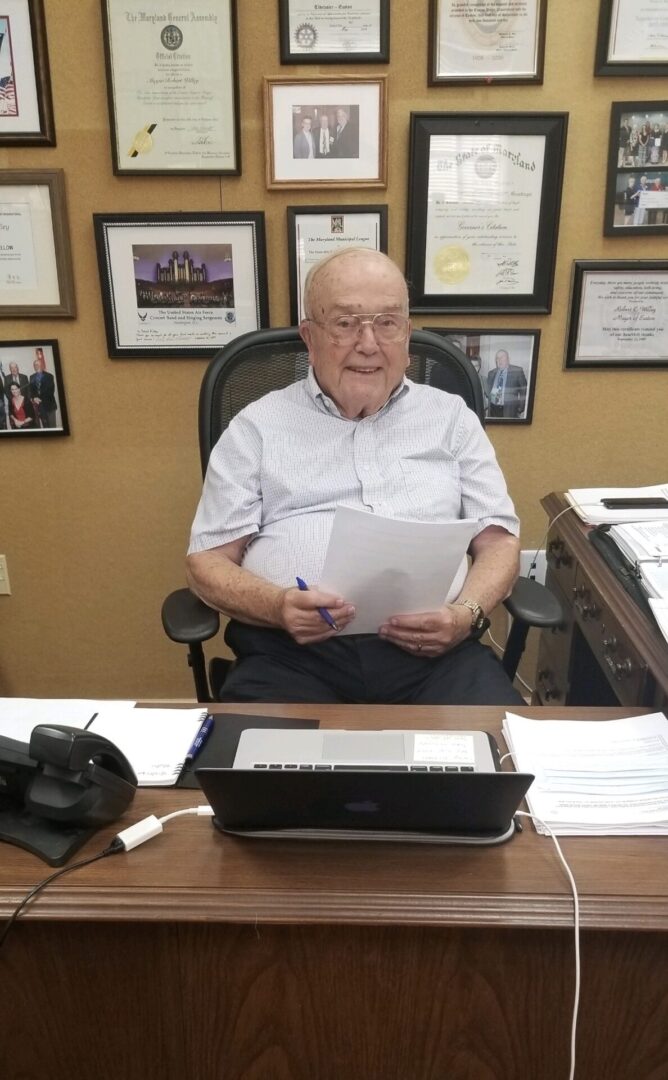
A Minute with Mayor Willey
Wasn’t last weekend’s weather great? Like me, I’m sure you’re looking forward to many more days like that. The Fire and Ice Festival is downtown this weekend, and the Stews and Brews on Saturday is at the Easton Fire House, and both are not to be missed. Then, we are only a few weeks away from St. Patrick’s Day and the fun built into that weekend. A lot of activity and a lot of folks out and around the Town, so be patient and courteous.

Webinars and Resources Starting on February 18th
National Models and Methods for Achieving Equitable Development (Feb 18th @ 1 PM) – Register here Community Engagement: Building a Unified Strategy (Feb 22 @ 3 PM) – Register here Agricultural Outlook Forum (Starts Feb 24th @ 8 AM) – Register here Minority Made: Minority Enterprise Development Symposium (Feb 24 @ 8:30 AM) – Register here Dream, Play, Build: Hands-On Community Engagement for Enduring Spaces and Places (Feb 25 @ 1 PM) – Register here Cybersecurity & Manufacturing in Maryland: An Integrated Approach (Feb 28 @ 10 AM) – Register here Foundation 2 Blade Industry Training for Maryland (Starts Mar 16 @ 9 AM) – Register here Helping the Nonprofit Community Thrive (Mar 17 @ 11:30 AM) – Register here TI2 DEI in Action Big Ideas Summit (Apr 13 @ 11:30 AM) – Register here
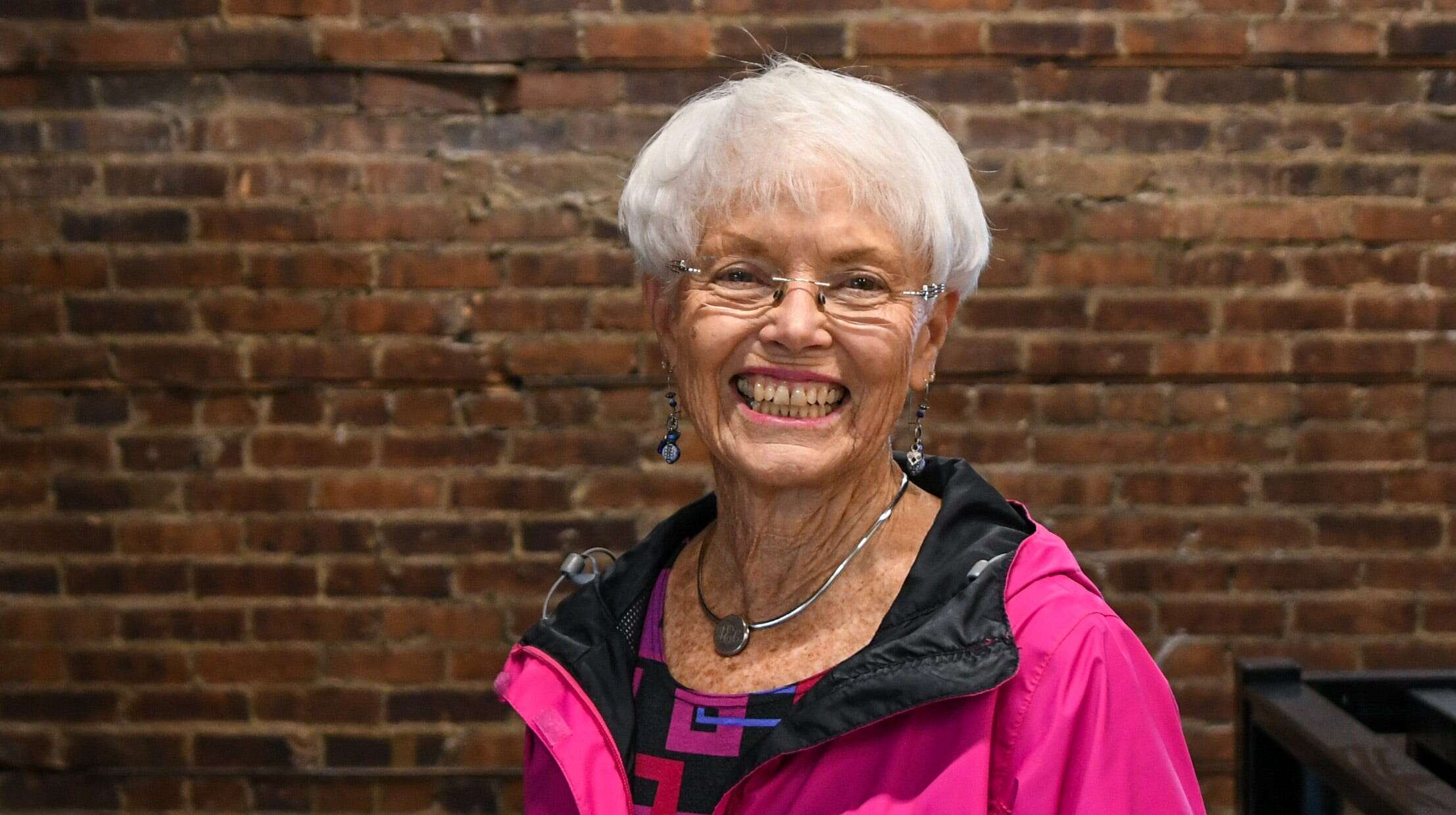
Interview with Senator Addie Eckardt
State Senator Adelaide (Addie) Eckard represents the 37th Legislative District, which includes the Counties of Dorchester, Caroline, Wicomico, and Talbot. She was elected to the Maryland Senate in 2014. EEDC: What are some areas that have your attention as we begin the New Year? Sen Addie Eckhardt (AE): I’ve been concerned about small businesses. We’ve seen some companies thrive while other companies didn’t do well. So my concern is how we revitalize and restore our businesses. I’m extremely worried about our health care industry because our workforce is just exhausted. Anytime something persists, it becomes more chronic than acute, and it takes a toll on everybody. The pandemic was something nobody could have anticipated, though the response to that has not been as short-term as everybody would have liked. Another concern is the workforce. And that’s across the board–everything from the healthcare industry, to the childcare industry, from retail to restaurants, and the entertainment field. Of course, there is worry about how we maintain all of the infrastructure issues that make businesses work, whether it’s water, sewer, broadband, or transportation. EEDC: So what’s being done to help? AE: I’m on the Budget Tax Committee, and our job is to make sure that the dollars that the state receives, either from income tax, personal property tax, general property tax, or other fees and in addition to that the funds that we get from the federal level are spent wisely on our state agencies and infrastructure. I also sit on the Audit Committee, and there is a regular and ongoing audit of the various departments. We look to make sure that all the procurement practices utilized through the pandemic are matched up. We want to know the procedures and policies in place align, and if not, why not? What was the return on our investment? We have lengthy conversations about that because it is the legislature’s role to be the checks and balances with the executive branch of government. EEDC: You’re on an impressive number of committees and sub-committees, so your finger is really on the pulse of what is going on in Maryland, and speaking of pulse, you’re a former nurse? AE: I am a nurse; I maintain all of my credentials and do some side work, as well. EEDC: I guess this fits nicely into some of the legislative work you’re involved with? AE: Yes, such as some Senate-generated assignments like the Behavioral Health Advisory Committees, the Suicide Commission, the Maryland Environmental Trust, Also, adult-use cannabis, sports betting, etc. So yes, it fits in with my nursing practice exceptionally well because I am an advanced practice nurse, also known as a clinical nurse specialist. That means I have my master’s degree and additional certification that I maintain regularly. I apply a lot of what I’ve learned about dealing with families to organizations. I’m always looking for possibilities within the community and know enough about what people are thinking about or may want. Then when I see resources within that structure, I can put people into the right place, make the proper introductions, and try to make something happen. EEDC: And that’s part of the local government work you’re involved with, right? AE: Correct. My job is about identifying problems in the system and then putting pressure in the right place to get it straightened out. Working with local governments and supporting local interests is part of my Senate work. It could be something such as the Frederick Douglass mural, the park development Easton Point/Port Street project for Easton, getting the waterfront done in Cambridge, or making sure we all have affordable health services. EEDC: What else is on your radar for Easton? AE: Well, we’ve got a number of things that are unfinished, like a hospital, right? I mean, that’s a biggie. With so much going on in downtown Easton, it may not be as apparent here as it is to many people in Cambridge that you can’t take people to Dorchester General anymore because if it’s something major, the ambulances will go either to Easton or Salisbury. So we need to make sure we have those facilities available. I think, particularly for Easton, workforce housing and community development are significant. We have noticed demographic changes in our community. When we look at our school system, we have quite a variety of cultures and changing income levels. We need to make sure that there are ample resources for all of our citizens. Programs such as BAAM help make sure that communities of color have access to resources to support younger families. They also build strength and continuity in families so that children are ready to come to school to learn. And then, we also need adequate resources for the population with special needs or unique abilities. Services such as The Arc Chesapeake Region or the Benedictine School help folks maintain their independence to the best of their ability in the community, which allows them to be able to be engaged to their fullest extent. EEDC: Identifying these critical issues is the first part; what’s the next step, how can we make sure it happens? AE: We want to make sure that organizations are grounded in public/private partnerships and that they’re getting community engagement to leverage the additional state funds that might be needed to push it to the finish line. That’s what happened with The Arc, and it also happened with BAAM making a lot of initial investment in their project. The Maritime Museum always makes a significant investment from the community and around the state on projects because they are seen more as a statewide resource. Then we have projects such as the trail and the Port Street Redevelopment Project, the Historical Society, and the Art Academy Museum. We’d love to see if funding is needed and then look in the budget to see what’s available. EEDC: What
A Minute with Mayor Willey
After anticipating snow all season, I think I can say I have seen enough already. I am waiting for Spring. Get ready for Chesapeake Fire + Ice on February 18th and 19th, and make sure you also get to the Stews and Brews event on February 19th. Both are expected to be can’t miss events. We will be doing much-needed water system and street repairs on Goldsborough Street throughout this month. We realize this is disruptive, and we ask for your patience. Lastly, I have truly enjoyed visiting Easton’s shops and businesses over the last few weeks and look forward to visiting more.
Webinars and Resources Starting on February 8th
Chesapeake Ag Innovation Center Virtual presentations (Starting Feb 8th @ 12 PM) – Register here Learn the Basics of Google Ads (Feb 15 @ 12 PM) – Register here Introduction to Real Estate Investing (Feb 10 @ 7:30 PM) – Register here USDA Small Business/New Vendor Quarterly Webinar (Feb 15 @ 2 PM) – Register here Maryland Association of Resources for Families and Youth (MARFY) Career Fair (Feb 22 @ 12 PM) – Register here Keys to a Successful Black Owned Business Startup (Feb 22 @ 1 PM) – Register here USDA’s 98th Annual Agricultural Outlook Forum (Feb 24 @ 8 AM) – Register here

Interview with Easton’s Council President Megan Cook
Megan Cook is Easton’s Council President, a position she’s held for approximately a year and a half. We spoke to her about issues on the minds of people who live and/or work in Easton. EEDC: You’ve been on the council for the past 12 years. What are some of the accomplishments that stand out for you, that you’re most proud of? Megan Cook (MC): For one, ushering and being an advocate for community projects. Anything park-related is the other thing that’s near and dear to my heart. And one of my long-term projects that’s finally gaining steam is Easton Point Park. We’ve been working on that for probably a good ten years, and we’re really seeing some results happening with the extension of the bike path, the bridge, and all the work that’s happening there. It’s going to be a fabulous waterfront park for the community. EEDC: One thing we hear a lot about is concern about what’s happening on Route 50. Can you talk about that? MC: Traffic around Route 50 is a significant concern. With all the new construction potentially happening on the east side of 50, this is especially impacting those families that we have living there. That’s kind of the natural growth area with all the new construction like Estate at Gannon Farms off Matthewstown Road and Elliott Road apartments. So it’s a difficult situation already, that’s going to be even more difficult with all the added cars. It’s something that is on our radar. We’re going to be meeting with State Highway and working with them, especially on some intersections that may be problematic, and concentrating on making some intersections more pedestrian-friendly, by adding some sidewalks. EEDC: Since we’re on the subject, there is also talk about the ‘beautification’ of Route 50. MC: We’ve been working on that. It’s a project that started maybe a year or two before COVID, and then it kind of shut down after COVID. EEDC: Another issue on the mind of your constituents is housing affordability. MC: A lot is happening right now in terms of development, two of which I already mentioned. There’s also Poplar Hill Farm, and we’ve got some with BAAM. My biggest concern with all this development is affordability, making sure that the wonderful people who work in town should live in town if they want. We have to make sure that some of our houses remain affordable, even as the market rate for homes continues to go up. We have a lot that attracts people to Easton, which is great, but we have to make sure that the families that work here can live and raise their kids here. So with each development, we’re looking to make sure that there’s an affordability piece with it. For example, with Estates at Gannon, prices are looking to be around $360,000 to $410,000, and that’s significant. We’re still working with Gannon on that. EEDC: Any worry about losing that small-town feeling? MC: Yes, and no. We do have a growth boundary around us, and we do have a green belt (EEDC NOTE: the green belt is a land-use zone designation used in land use planning to retain areas of largely undeveloped, wild, or agricultural land surrounding or neighboring urban areas). This gets back to affordability — we have limited space for growth, so we have to make sure that we keep some of that area affordable for our families. But I think with our downtown and all the other things that attract families here, we’ll always keep that small-town feeling. We’ve been a regional destination for shopping for a long time. We have Target and that complex as one area of the community. We have our downtown, which is another area. The whole east end is growing out, and we have walkable neighborhoods. Those are the pieces that come together to help us keep that small-town feel and a great place to live and raise a family. EEDC: What’s else is on your plate? What are your priorities for the upcoming year? MC: A lot is happening, and again, it goes back to the developments. We haven’t seen this much housing development in the town of Easton for a long time, probably not since Eastern Club East. So that’s a definite priority. We’re just entering the budget season and have the town budget coming up. We have a lot of amenities for families: we’ve got a great public works division, great parks, our police department, etc., and we need to make sure that we have enough staff and a level of service to keep our families safe and happy. We have to make sure our budgets cover all of these essential services. We also have a dog park in the works. The group went through parks and rec, they come to the council, and have a space for the dog park (located at Brewers Lane, across from the farmer’s market). They’re now waiting for Midshore Community Foundation to set up an account for their fundraising efforts to get it built. I think it’s going to be a great addition to downtown. EEDC: There’s also the town’s comprehensive plan, right? MC: That’s a project that will take a whole year, and Lynn Thomas (Easton’s Town Planner) does a great job with that. The great thing is that there are a lot of opportunities for the community to get involved. I recommend that people go to the town website (https://eastonmd.gov/564/2023-Comprehensive-Plan-Update), learn more about the plan, and fill out the survey. They can keep in touch with the community meetings, which will be held in every ward. I ask that everyone please come out, share their views and concerns because those are the things that go into making this comp plan. That will become the playbook, the roadmap we use for the next decade. EEDC: Anything else you want to